Choosing the right worktop is one of the most important decisions when designing a new kitchen. Your worktop needs to look great, handle daily use, and continue performing well for years to come.
When comparing quartz vs granite worktops, many homeowners find it difficult to decide because both materials offer excellent durability, attractive finishes, and long-term value.
The good news is that there is no universal winner. The best choice depends on your lifestyle, design preferences, maintenance expectations, and budget.
In this guide, we explain the differences between quartz and granite, compare their performance in key areas, and help you decide which option is right for your home.
Understanding Quartz and Granite Worktops
Before comparing them, it helps to understand what each material actually is.
What Are Granite Worktops?
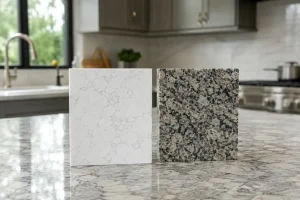
Granite is a natural stone formed deep within the earth over millions of years. Large slabs are quarried, cut, polished, and transformed into kitchen worktops.
Because granite is entirely natural, every slab has its own unique patterns, colours, and mineral variations. No two granite worktops are exactly the same.
What Are Quartz Worktops?
Quartz worktops are engineered surfaces made from natural quartz crystals combined with resins and pigments.
This manufacturing process creates a highly durable and consistent material that can be produced in a wide range of colours and designs.
For homeowners seeking a clean and uniform appearance, quartz often provides greater design flexibility.
Quartz vs Granite Worktops at a Glance
Feature | Quartz Worktops | Granite Worktops |
Material Type | Engineered stone | Natural stone |
Appearance | Consistent and uniform | Unique natural patterns |
Maintenance | Very low maintenance | Requires periodic sealing |
Stain Resistance | Excellent | Good when sealed |
Heat Resistance | Good | Excellent |
Colour Choices | Wide range | Natural colour variations |
Durability | Extremely durable | Extremely durable |
Outdoor Use | Not generally recommended | Suitable for outdoor areas |
Hygiene | Non-porous surface | Slightly porous surface |
Uniqueness | Consistent designs | Every slab is different |
Appearance: Which Looks Better?
Appearance is often the deciding factor in a kitchen worktop comparison.
Why Choose Quartz?
Quartz offers consistency. If you want a sleek modern kitchen with clean lines and predictable colours, quartz is often the preferred choice.
Manufacturers can create designs that resemble marble, concrete, or natural stone while maintaining a uniform appearance throughout the surface.
Why Choose Granite?
Granite offers natural beauty that cannot be replicated exactly.
Each slab features unique veining, speckles, and mineral formations. Many homeowners love the character and individuality that granite brings to a kitchen.
If you want your worktop to be truly one of a kind, granite has a clear advantage.
Which Is More Durable?
When looking for durable kitchen worktops, both materials perform exceptionally well.
Granite is one of the hardest natural stones available for residential kitchens.
Quartz is engineered to provide outstanding strength and resistance to everyday wear.
Both options can withstand years of food preparation, family life, and regular use when properly cared for.
Quartz Worktops Benefits
Some of the key quartz worktop benefits include:
- Highly resistant to stains
- Non-porous surface
- Consistent appearance
- Wide range of colours
- Easy everyday cleaning
- Excellent resistance to bacteria
Granite Worktops Benefits
Some of the major benefits of granite worktops include:
- Completely natural material
- Unique appearance
- Outstanding heat resistance
- Long lifespan
- Excellent scratch resistance
- Adds a premium feel to the kitchen
Engineered Stone vs Natural Stone
One of the biggest differences in the engineered stone vs natural stone debate is consistency versus individuality.
Quartz is manufactured to provide predictable colours and patterns.
Granite is created by nature, meaning each slab contains unique variations.
Neither option is inherently better. It simply depends on whether you prefer a uniform design or a naturally distinctive look.
Maintenance: Which Is Easier to Look After?
Maintenance is often where homeowners see the biggest difference.
Quartz Worktop Maintenance
Quartz requires very little ongoing care. Because it is non-porous, liquids cannot easily penetrate the surface. For most households, cleaning simply involves warm water, mild soap, and a soft cloth. Quartz does not require regular sealing.
Granite Worktop Maintenance
Granite needs slightly more attention.
As a natural stone, granite contains tiny pores that can absorb liquids if left unprotected.
To maintain performance and appearance, granite should be sealed periodically according to manufacturer recommendations.
Daily cleaning remains straightforward, but sealing is an additional step homeowners should consider.
Heat Resistance Comparison
If you regularly cook and use hot pans, heat resistance may influence your decision.
Granite performs exceptionally well under high temperatures.
Quartz is heat-resistant but contains resin components that can be affected by excessive direct heat.
Regardless of the material, we always recommend using heat mats or trivets to protect your worktop.
Quartz Worktops Cost vs Granite Worktops Cost
One of the most common questions homeowners ask is whether quartz or granite is the more affordable option.
The answer is that both materials are available across a wide range of price points. The final cost depends on the quality of the material, the size of your kitchen, edge profiles, cut-outs, and installation requirements.
Quartz Worktops Cost
In the UK, quartz worktops typically cost between £250 and £600+ per square metre supplied and fitted.
Entry-level quartz designs are usually at the lower end of the range, while premium brands and marble-effect quartz surfaces can exceed £600 per square metre.
Quartz pricing is influenced by:
- Brand and manufacturer
- Thickness of the slab
- Colour and pattern complexity
- Edge profile choices
- Installation requirements
Although quartz may have a higher upfront cost, many homeowners appreciate its low maintenance requirements and long-term durability.
Granite Worktops Cost
Granite worktops generally range from £200 to £700+ per square metre supplied and fitted.
Common granite colours are often competitively priced, while rare stones with distinctive patterns and imported materials can cost considerably more.
Granite pricing depends on:
- Stone rarity and availability
- Country of origin
- Slab size and thickness
- Colour and pattern variation
- Fabrication and installation complexity
Real Life Example: Busy Family Kitchen
Imagine a family kitchen used daily for cooking, homework, entertaining, and family meals.
If the priority is easy cleaning and minimal maintenance, quartz is often the practical choice.
Its non-porous surface makes it simple to manage spills and everyday messes.
Real Life Example: Character-Filled Traditional Kitchen
For homeowners creating a classic kitchen with natural materials and timeless appeal, granite can be an excellent fit.
The unique patterns and natural variations help create a warm and distinctive appearance that works beautifully in traditional homes.
If you are planning a complete kitchen renovation, our kitchen design team can help you explore materials and layouts that suit your home and lifestyle.
Common Mistakes When Choosing a Worktop
Many homeowners focus only on appearance and overlook practical considerations.
Some common mistakes include:
Choosing Based Only on Colour
A beautiful worktop should also suit your lifestyle and maintenance expectations.
Ignoring Long-Term Maintenance
Understanding granite worktop maintenance and quartz worktop maintenance requirements before installation prevents surprises later.
Prioritising Initial Cost Over Value
The cheapest option today may not deliver the best long-term satisfaction.
Forgetting How You Use Your Kitchen
Think about cooking habits, cleaning routines, family life, and entertaining before making a decision.
How to Choose the Best Worktop Material for Kitchens
Ask yourself the following questions:
- Do I want a completely natural material?
- Do I prefer a consistent appearance?
- Am I comfortable with occasional sealing?
- How important is stain resistance?
- Will the kitchen experience heavy daily use?
- What style of kitchen am I creating?
Your answers will usually point clearly towards either quartz or granite.
Quartz Worktops vs Granite Worktops: Final Verdict
When comparing quartz countertops vs granite countertops, both materials offer outstanding performance.
Choose quartz if you want:
- Low maintenance
- Consistent appearance
- Strong stain resistance
- Modern design flexibility
Choose granite if you want:
- Natural stone beauty
- Unique patterns
- Exceptional heat resistance
- A one-of-a-kind worktop
Neither option is wrong. The best choice is the one that complements your lifestyle and the overall design of your home.
Speak to Our Team
At Whittlesey Bathroom & Kitchen Studio, we help homeowners choose worktops that combine practicality, durability, and beautiful design.
Whether you are considering quartz, granite, or another premium surface, we can guide you through the options and help you create a kitchen that works perfectly for your lifestyle.
Contact us today to discuss your project and explore the best worktop solutions for your home.
FAQs
Are quartz worktops better than granite worktops?
Neither is universally better. Quartz offers easier maintenance while granite provides unique natural beauty and stronger heat resistance.
Which worktop lasts longer?
Both materials can last for decades when properly maintained and professionally installed.
Do quartz worktops stain easily?
No. Quartz is non-porous and highly resistant to staining.
Do granite worktops require sealing?
Yes. Granite should be sealed periodically to maintain stain resistance and protect the surface.