When planning a bathroom renovation, one of the most common questions we hear is about the difference between a wet room and a shower tray. Both options can create a modern and comfortable shower space, yet they work in very different ways.
Understanding the practical differences is important before making a decision. The choice affects your bathroom layout, installation cost, cleaning routine, and how the room feels day to day.
In this guide, we explain the wet room vs shower tray debate. We look at how each option works, their advantages, typical costs, and which one suits different homes. By the end, you will have a much clearer idea of which shower solution is right for your space.
What Is a Wet Room?
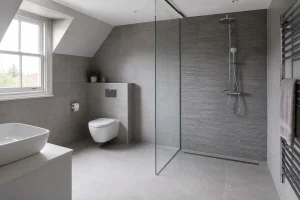
A wet room is a fully waterproofed bathroom where the shower area blends into the rest of the floor. Instead of using a raised base, the entire floor is sealed and slightly sloped, so water flows into a floor drain.
A good wet room drainage system is essential. The floor must be carefully designed so water drains away quickly without spreading across the room.
Because the floor is level throughout, wet rooms create an open and seamless look. Many homeowners choose them for their modern appearance and practical accessibility.
Wet rooms are also flexible in design. With the right layout and tiling, they can work beautifully in both large and compact spaces. In fact, many people explore wet room designs for small bathrooms because removing a bulky enclosure can make the room feel larger.
What Is a Shower Tray?
A shower tray is the base used in a traditional shower enclosure. It is a waterproof platform that sits on or just above the bathroom floor and directs water to the drain.
Most trays are paired with glass screens or doors to contain splashes. This creates a defined shower area within the bathroom.
Modern trays are designed to look sleek and minimal. Some ultra-slim models sit almost flush with the floor, giving the appearance of a walk-in shower while still keeping water contained.
A typical shower tray installation is also quicker than building a wet room because the tray already includes drainage and waterproofing. This makes it a practical option for many renovations.
Wet Room vs Shower Tray: Key Differences
Although both options provide a walk-in shower experience, the way they are built and used is very different.
Feature | Wet Room | Shower Tray |
Floor design | Entire floor waterproofed and sloped | Pre-formed tray with drain |
Appearance | Open and seamless | Defined shower area |
Accessibility | Step-free entry | Usually a small step |
Installation | More complex | Faster and simpler |
Cost | Higher installation cost | More budget friendly |
This comparison helps explain why the wet room or shower tray decision often comes down to budget, layout, and personal preference.
Wet Room Benefits
Many homeowners choose wet rooms because they offer a modern and spacious feel. The open design removes visual barriers and can transform the look of a bathroom.
Some of the most notable wet room benefits include:
- Completely step-free access
- A clean and contemporary appearance
- Flexible layouts without tray size restrictions
- Easier movement within the space
For households planning ahead for accessibility, wet rooms can also make daily routines safer and more comfortable.
Shower Tray Advantages
Shower trays remain extremely popular because they are reliable, affordable, and simple to maintain.
Some key shower tray advantages include:
- Faster installation
- Lower renovation cost
- Better water containment
- Easier cleaning with fewer tiled surfaces
For many family bathrooms, this practical approach is often the best balance between design and everyday usability.
Wet Room Installation Cost vs Shower Tray Cost
Cost is one of the biggest deciding factors when comparing these two options.
A wet room installation cost is usually higher because it involves several additional steps. The entire floor must be waterproofed and sloped. Specialist drainage and extensive tiling are also required.
On average, a professionally installed wet room can cost significantly more than a standard shower tray installation.
By comparison, the shower tray vs wet room cost difference can be substantial. Shower trays require less preparation and fewer materials, which keeps both labour and material costs lower.
That said, many homeowners see wet rooms as a long-term investment because they add a luxurious feel and can increase property appeal.
Walk In Shower vs Wet Room
Some people confuse a walk in shower vs wet room comparison because the designs can look similar.
A walk-in shower normally uses a tray but removes the door, leaving only a glass screen. This keeps water contained while maintaining an open appearance.
A wet room goes further by removing the tray completely and waterproofing the whole floor.
Both options can create a contemporary look. The difference lies mainly in construction and drainage.
Which Option Works Best in Small Bathrooms?
Small bathrooms often benefit from clever layout choices.
A wet room can work well because removing the tray and enclosure creates a more open floor space. This approach is often used in modern wet room bathroom ideas, especially where every centimetre matters.
However, compact shower trays are also widely available and can fit neatly into corners or alcoves. When space is tight, a slim tray with a clear glass screen can still create a spacious feel.
In many homes, the decision depends on the structure of the floor and how much renovation work is planned.
Common Mistakes When Choosing a Wet Room
A wet room can be an excellent feature, but only when installed correctly.
Some of the most common issues we see include:
- Poor floor gradients that cause water pooling
- Incorrect waterproofing during installation
- Choosing tiles that become slippery when wet
- Insufficient ventilation leading to excess moisture
Professional planning avoids these problems and ensures the room functions properly for years.
Practical Example
Imagine a homeowner renovating a small en-suite.
If they install a shower tray with an enclosure, the space remains clearly defined and water stays contained. The installation is quick and affordable.
If they choose a wet room instead, the space becomes fully open. The bathroom may feel larger and more modern, but the installation requires careful waterproofing and drainage planning.
Both options can work well. The key is matching the design to the household’s needs.
Wet Room vs Shower Tray Pros and Cons
Here is a quick summary to help visualise the wet room vs shower tray pros and cons.
Wet Room
Pros
- Modern open layout
- Step-free access
- Flexible design possibilities
Cons
- Higher installation cost
- Requires specialist waterproofing
- More extensive tiling
Shower Tray
Pros
- Lower installation cost
- Easier to install
- Better water containment
Cons
- Slight step into the shower
- Less open visual design
Final Thoughts
Both options can transform a bathroom when planned carefully. Wet rooms deliver a luxurious and open feel, while shower trays provide reliable everyday practicality.
The best choice depends on your space, budget, and how you use your bathroom. There is no single answer that suits every home.
Need Help Choosing the Right Shower?
At Whittlesey Bathroom & Kitchen Studio, we help homeowners design bathrooms that balance style, practicality, and long-term reliability. Our team works closely with you to understand your space and recommend the best solution, whether that is a wet room or a modern shower installation.
If you are planning a renovation, we would be happy to discuss ideas and help you create a bathroom that works beautifully for your home. Contact us today to discuss your bathroom project and get expert advice from our team.