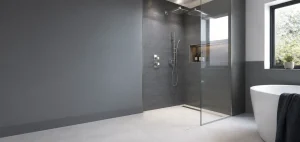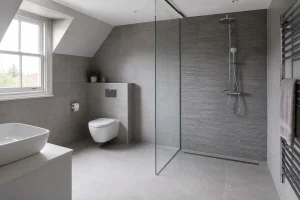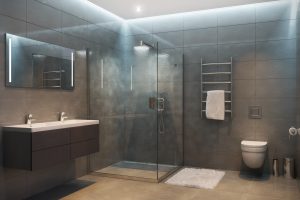
If you are wondering how to make a wet room, we want to walk you through it in a simple and practical way. A wet room can completely transform a bathroom. It creates a modern, open space and removes the need for bulky shower trays or enclosures.
In this guide, we will explain:
- The wet room meaning
- What you need to build one
- Step-by-step installation basics
- Common mistakes to avoid
- How much it costs
- Whether it suits your home
What Is a Wet Room?
Before we explain how you make a wet room, let’s define it properly.
A wet room is a fully waterproofed bathroom where the shower area is leveled with the rest of the floor. The floor is gently sloped towards a drain, so water flows away naturally.
There is no raised shower tray. The whole space is “tanked” which means it is sealed to stop leaks.
Why Do People Choose a Wet Room?
Many homeowners choose a wet room because:
- It looks clean and modern
- It is easier to access
- It works well in small spaces
- It can add value to a property
We often get asked, can you turn a small bathroom into a wet room?
Yes, you can. In fact, small bathrooms often benefit the most because removing bulky fittings creates more usable space.
Yes, you can. In fact, small bathrooms often benefit the most because removing bulky fittings creates more usable space.
Wet Room vs Traditional Bathroom
Here is a simple comparison to help you decide:
| Feature | Wet Room | Traditional Bathroom |
| Shower area | Level with floor | Raised tray |
| Waterproofing | Entire floor sealed | Localised sealing |
| Accessibility | Excellent | Depends on layout |
| Installation complexity | Higher | Moderate |
| Overall look | Minimal and open | Defined zones |
When comparing wet room vs traditional bathroom, the main difference is waterproofing and drainage design.
What Do You Need to Build a Wet Room?
If you are following a proper wet room installation guide, you will need:
- A suitable drainage system
- Floor former or sloped screed
- Waterproof membrane (tanking system)
- Slip resistant tiles
- Suitable shower and screen
- Extractor fan for ventilation
Getting the wet room drainage system right is one of the most important steps. If the water cannot drain properly, the whole room will suffer.
Step by Step Guide to Making a Wet Room
Now let me break down the full process clearly.
Step 1: Plan the Layout
We always start by measuring the space carefully.
Think about:
Think about:
- Where the drain will go
- Where the shower will be positioned
- How water will flow
This is where smart, wet room bathroom design ideas make a difference.
Step 2: Prepare the Floor
Good wet room floor preparation is essential.
If the floor is timber:
- Floorboards are removed
- Plywood is installed between joists
- A floor former is fitted
If the floor is solid:
- Screed may need adjusting
- The drain is recessed into the floor
The aim is to create a gentle slope towards the drain.
Step 3: Install the Drainage System
The wet room shower installation depends on proper drainage.
You can choose:
- Linear drains (modern look)
- Square drains (more traditional)
The drain must connect directly to the waste pipe. It should not be shared with other fittings.
Step 4: Waterproofing a Wet Room
This is the most critical part.
Waterproofing a wet room involves installing a membrane across:
- The entire floor
- At least 1 metre up the walls in the shower area
Every joint and corner must be sealed. If this step is rushed, leaks can appear later.
Step 5: Tiling
Tiles must be:
- Slip resistant
- Suitable for wet environments
- Laid carefully to maintain the slope
Large tiles may need cutting to follow the gradient correctly.
Step 6: Final Fix & Ventilation
After tiling:
- Fit shower controls
- Install glass screen if needed
- Seal edges properly
- Check extractor fan performance
Good ventilation prevents mould and protects your investment.
How Much Does It Cost to Make a Wet Room?
One of the most common questions we hear is:
How much does it cost to make a wet room?
How much does it cost to make a wet room?
In the UK, the cost to install a wet room typically ranges from:
- £5,000 to £12,000+
The final price depends on:
- Size of the room
- Type of drainage
- Floor structure
- Tile choice
- Plumbing changes
It is usually more expensive than a standard bathroom because of waterproofing and structural adjustments.
Do You Need Planning Permission for a Wet Room?
In most homes, you do not need planning permission.
However, building regulations must be followed, especially for:
- Drainage
- Structural floor work
- Ventilation
If you live in a flat, extra rules may apply.
Common Mistakes to Avoid
From experience, these are the biggest problems people face:
- Poor waterproofing
- Incorrect floor slope
- Choosing slippery tiles
- Ignoring ventilation
- Hiring unqualified installers
Cutting corners during installation often leads to expensive repairs later.
Is a Wet Room Right for You?
A wet room works well if:
- You want a modern look
- You need better accessibility
- You are renovating fully
- You want a long-term solution
It may not be ideal if you want a quick, low-cost update.
Let’s Make It Simple
If you are thinking about installing one, we always recommend speaking to experienced specialists rather than attempting full DIY work.
At Whittlesey Bathroom & Kitchen Studio, we help homeowners design and install practical, stylish wet rooms that are built to last. Whether you are looking for inspiration in our showroom or need trusted support with your wet room project, we focus on getting every detail right from drainage through to the final finish.
If you would like honest advice about whether a wet room is right for your home, get in touch today. We are always happy to guide you through the options and help you plan the next step with confidence.