A wet room floor has more to do than look good. It needs to feel comfortable underfoot, drain water cleanly, give enough grip and stay easy to look after in daily use.
Tile choice plays a big part in all of that. The right tile can help a wet room feel calm, practical and carefully finished, while the wrong one can make cleaning, comfort or drainage harder than it needs to be.
Start with the way water will move

Before thinking about colour or style, it helps to think about water. A wet room floor is designed so water falls towards the waste rather than sitting in corners or spreading across the room. The tiles you choose need to work with that fall.
Smaller tiles are often easier to shape around the gentle slopes that lead to the drain. Because each tile is smaller, the fitter can follow the changing levels more precisely. This can be especially useful around a central or corner waste, where the floor may need to fall from more than one direction.
Larger tiles can still work well, but they need more careful planning. If the floor has a single, even fall towards a linear drain, a larger tile may sit neatly and give a clean look. If the fall changes direction, large tiles may need more cuts, which can affect the finished appearance.
This is why the floor layout should be considered before tiles are ordered. A good wet room design looks at the drain position, finished floor level, door threshold and the tile size together. Whittlesey Bathrooms can talk through these choices as part of a planned wet room installation, so the finish is practical as well as attractive.
Choose a tile size that suits the drain and the room

Tile size changes both the look and the behaviour of a wet room floor. Small mosaics, medium square tiles and larger rectangular tiles can all be suitable, but they each have different strengths.
Mosaic tiles give plenty of grout lines, which can help with grip. They are also easier to shape around falls and awkward edges. The trade off is that there is more grout to clean, so the grout quality, colour and sealing approach matter.
Medium tiles are a popular middle ground. They can look calm and simple without creating too many grout lines, while still giving the fitter enough flexibility to form a neat fall. They often suit bathrooms where the wet area blends into the rest of the floor.
Large tiles can make a room feel more open because there are fewer breaks across the floor. They can work particularly well with a linear waste, where the floor fall is planned in one direction. However, they are less forgiving if the falls are complex, so the setting out needs to be precise.
It is also worth considering how the tile size relates to the rest of the room. A very small tile across a large floor may feel busy. A very large tile in a compact shower area may create awkward cuts. The best choice is usually the one that lets the drainage work properly while giving a balanced, tidy finish.
Grip matters more than shine

A wet room floor will regularly be walked on with wet feet, so grip should be part of the decision from the start. Glossy wall tiles can look smart, but that does not mean the same finish belongs on the floor. Floor tiles need a surface that feels secure when wet.
Many floor tiles are described with slip resistance information by the manufacturer. You do not need to become an expert in testing systems, but you should ask whether the tile is suitable for wet bathroom floors. A tile that feels smooth and polished in a showroom may not be the best choice under running water.
Texture does not have to mean rough or uncomfortable. Many modern wet room tiles have a fine surface that gives useful grip while still feeling pleasant under bare feet. This is often a better choice than a heavily textured tile that traps soap residue or feels harsh to stand on.
Grout lines also contribute to grip. Smaller tiles, especially mosaics, create more joints across the floor, which can help the surface feel less slippery. Larger tiles rely more heavily on the tile surface itself, so the finish becomes even more important.
If the wet room will be used by children, older relatives or anyone who wants extra reassurance underfoot, it is worth prioritising grip over a very polished look. A calm matt or softly textured floor can still feel refined, but it will be better suited to everyday use.
Think about grout lines before you decide
Grout lines affect drainage, grip, cleaning and the final appearance. They are not just a finishing detail. On a wet room floor, the width, colour and quality of the grout all matter.
More grout lines can give better grip and make it easier to work with a sloped floor. This is one reason mosaics are often used in shower areas. The joints allow the tiled surface to follow the fall towards the drain without creating lipped edges.
Fewer grout lines can make cleaning simpler because there are fewer joints to scrub. This is one of the attractions of larger tiles. The important point is that the floor still needs to drain well, and the tile surface still needs enough grip.
Grout colour also deserves thought. Very pale grout can look crisp at first, but it may show marks more readily in a busy wet room. A soft grey or neutral grout can be more forgiving while still keeping the overall look fresh. Matching the grout closely to the tile creates a calmer finish, while a stronger contrast makes the tile pattern more visible.
The condition behind the tiles matters too. A wet room relies on proper preparation beneath the finished surface, including waterproofing where required. For a deeper look at that part of the process, Whittlesey Bathrooms has a useful guide to how wet room tanking protects floors and walls.
Use pale and grey finishes with care
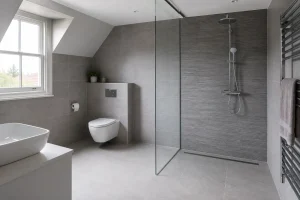
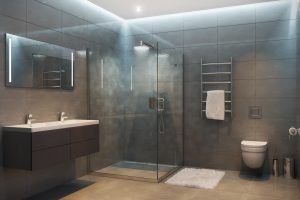
Pale and grey tiles are common choices for wet rooms because they can make the space feel clean, calm and easy to live with. They also work with a wide range of baths, basins, brassware and fitted furniture.
A pale floor can help a smaller room feel lighter, but it may show hair, dust and darker marks more clearly. This does not mean pale tiles are a poor choice. It simply means the surface finish and grout colour need to be chosen with daily cleaning in mind.
Grey tiles can be very practical, especially in soft mid tones. They tend to disguise minor marks better than bright white tiles, and they can make chrome fittings, white sanitaryware and simple bathroom furniture feel more grounded. The key is to avoid going so dark that water marks and soap residue become more obvious.
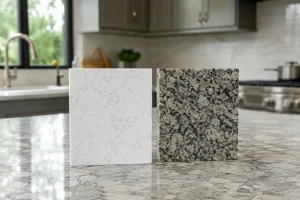
Pattern also affects how easy the floor is to live with. A slight stone effect or gentle variation can be forgiving, while a completely flat colour may show every drip. Strong patterns can hide marks, but they may make the room feel busier, especially when used across the whole floor.
For many homes, the most practical choice is a soft neutral tile with a matt or lightly textured finish and a grout colour that does not fight the tile. That combination can give a fresh look without making maintenance feel demanding.
Cleaning starts with sensible choices

A wet room should be easy to use every day, and cleaning is part of that. Tile choice can make the difference between a floor that stays presentable with regular care and one that needs constant attention.
Very rough textures can hold soap, shampoo and limescale residue. Very glossy surfaces can show water spots and feel less secure when wet. The sweet spot is usually a tile with enough texture for grip, but not so much that it catches dirt.
Grout is often where cleaning effort builds up, so avoid treating it as an afterthought. Good installation, suitable materials and neat joint lines all help the floor stay easier to maintain. During fitting, details such as levels, tile spacing and the position of cuts can affect how tidy the finished floor feels and how well water clears from the surface.
It is also worth thinking about the rest of the bathroom. Wall tiles, screens, trays, drains and storage all influence how much water and product ends up on the floor. A well planned wet room considers the whole space rather than choosing floor tiles in isolation.
If you are planning more than one room, the same practical thinking applies to other flooring choices too. The guide to flooring for busy kitchen areas covers similar ideas around durability, cleaning and everyday use.
- Smaller tiles can make it easier to shape the floor around the drain and create useful grout lines for grip.
- Larger tiles can look calm and simple, but they need the right drain position and careful setting out.
- A wet room floor tile should feel secure when wet, so grip matters more than a glossy finish.
- Pale and grey tiles can work well, especially when paired with a practical grout colour.
- Cleaning is easier when the tile has balanced texture, neat joints and a layout that helps water drain properly.
Frequently asked questions
Are large tiles suitable for wet room floors?
Yes, they can be suitable when the floor fall and drain position are planned around them. They often work best with a linear drain and a simple fall. If the floor needs to slope in several directions, smaller tiles may be easier to fit neatly.
Do mosaic tiles make a wet room floor safer?
Mosaic tiles can help because the extra grout lines add texture underfoot and make it easier to follow the slope towards the waste. The tile surface still needs to be suitable for wet floors, and the grout needs to be chosen carefully.
What colour grout is best for a wet room floor?
There is no single best colour, but soft grey or neutral grout is often practical because it is less stark than white and can be easier to keep looking tidy. The grout should complement the tile while supporting regular cleaning.
Should wet room floor tiles match the wall tiles?
They can match, but they do not have to. The floor has different demands, especially around grip and drainage. Many people choose a practical floor tile that tones with the wall tiles rather than using exactly the same product everywhere.
Plan a wet room that works beautifully
If you are choosing tiles for a new wet room, Whittlesey Bathrooms can help you balance style, drainage, comfort and cleaning from the start.